How to Tell if a School Is Actually Montessori (7 Honest Signs)
MontessoriCity Editors Jun 2, 2026 9 min read
Here is a fact that surprises almost every parent: the word "Montessori" is not trademarked. In the United States, a 1967 ruling by the Patent and Trademark Office’s Trademark Trial and Appeal Board found that the term is generic and descriptive, which placed it in the public domain. The practical result is blunt — any daycare, anywhere, can add "Montessori" to its name tomorrow without changing a single thing about how it runs.
That is not a reason for cynicism. There are wonderful, deeply authentic Montessori schools everywhere. But it does mean the name on the door tells you nothing on its own. You have to look at the room, the materials, and the adults. Here are seven signs that reliably separate a genuine program from a name-only one.
Walk in unannounced during the morning. In an authentic Primary (3–6) classroom you should see most children working alone or in small clusters, each absorbed in something they chose. The room hums; it does not buzz. If you instead see fifteen children all doing the same teacher-led craft at the same time, you are looking at a traditional preschool that borrowed the name.
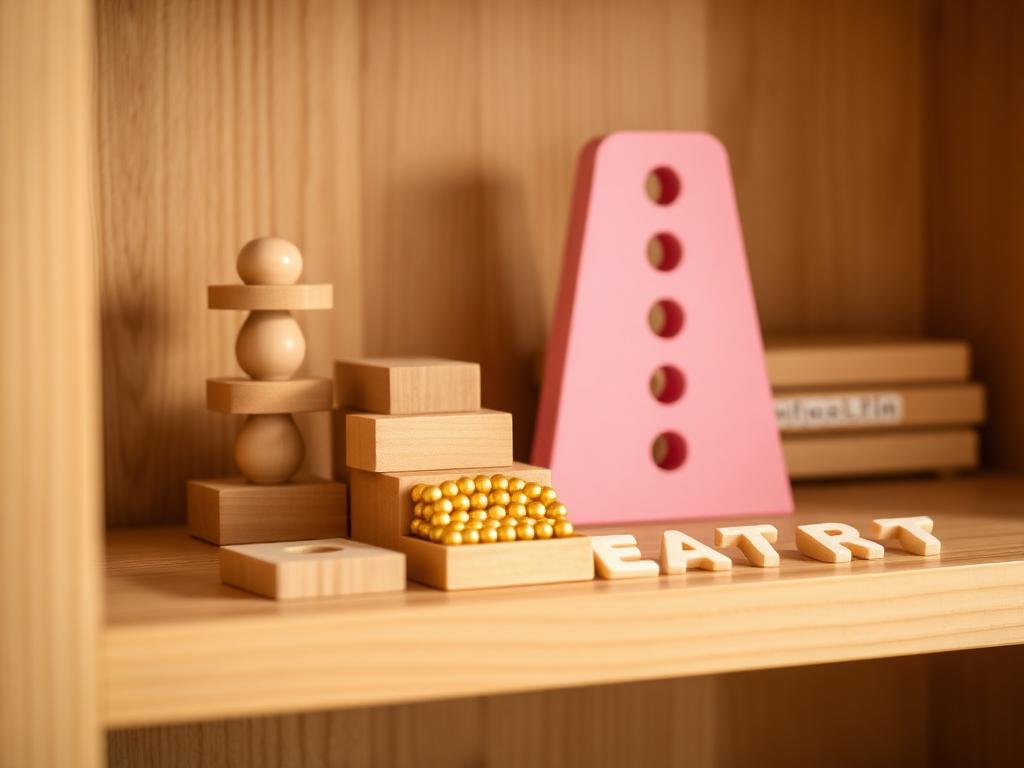
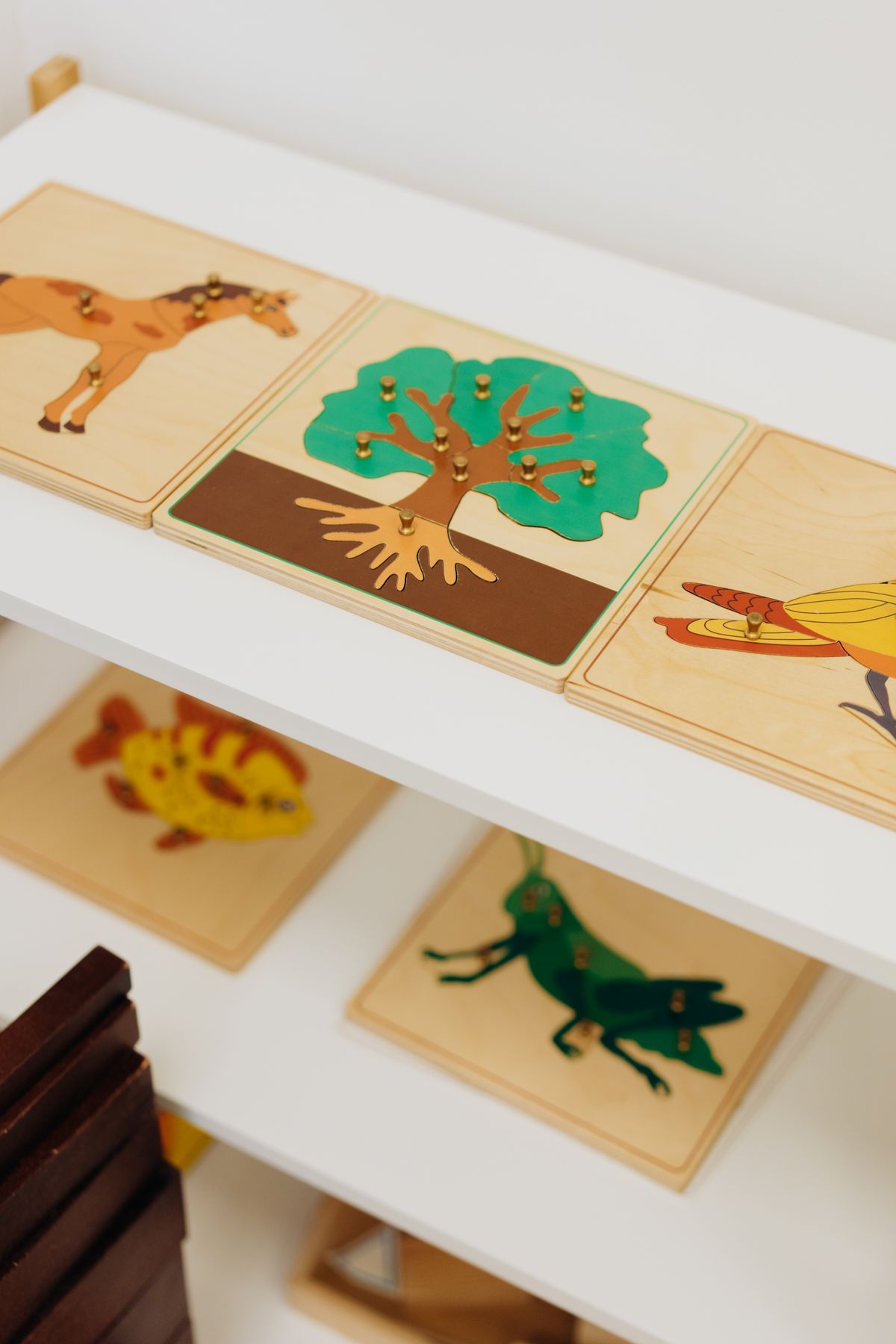
Look for the hallmark materials on low, open shelves: the Pink Tower, the Brown Stair, sandpaper letters, the golden bead material, knobbed cylinders. Crucially, there should be one of each — Montessori materials are deliberately singular, so a child learns to wait, and they are self-correcting, so the child sees their own mistake without an adult marking it wrong. Shelves full of plastic, battery-powered toys are a red flag.
Authentic Montessori groups children in three-year age spans — typically 3–6 for Primary, and 6–9 or 6–12 for Elementary. Younger children learn by watching older ones; older children consolidate knowledge by teaching. A school that sorts children into single-age rooms (all the threes here, all the fours there) has set aside one of Montessori’s structural pillars.
Ask one specific question: "How long is the morning work period?" The answer you want is roughly two and a half to three uninterrupted hours, with no scheduled breaks for whole-group circle time, crafts, or worksheets carving it up. That long block is where concentration develops. If the day is chopped into 20-minute teacher-led activities, the schedule is not Montessori, whatever the brochure says. We cover why this block matters in The Montessori Work Cycle.
The single most reliable signal of authenticity is the adult’s training. Ask directly: "Where did the lead guide earn their Montessori diploma, and at what level?" You want to hear a credential from an AMI or AMS program, or one accredited by MACTE (the U.S.-recognized accrediting body for Montessori teacher training). A weekend workshop or a generic early-childhood certificate is not the same thing. We explain the alphabet soup in AMI, AMS, and CCMA accreditation.
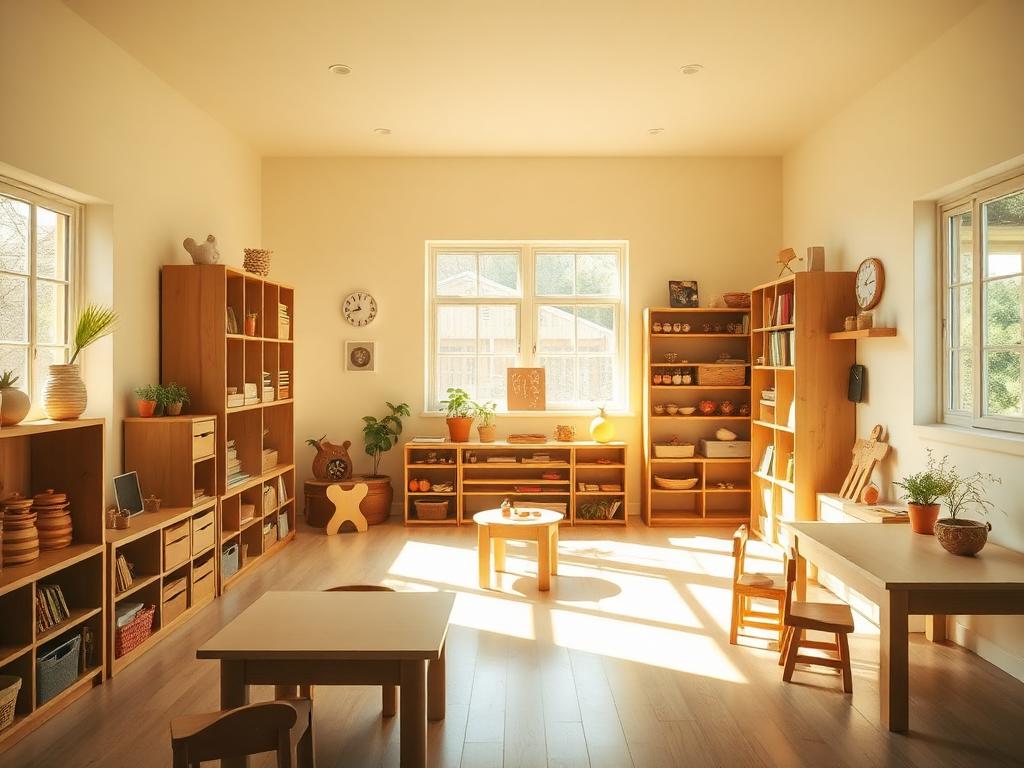
In a real Montessori room, the space does much of the work: child-sized furniture, real glass and ceramic (not plastic) for practical-life activities, plants and animals the children care for, and everything within a child’s reach so they can act without asking an adult. This "prepared environment" is a Montessori concept, not decoration. If the room is set up for the adults’ convenience rather than the child’s independence, that tells you something.
Teacher training accreditation (MACTE) is about the adults. Some schools also pursue school-level accreditation — AMI recognition, AMS membership, or, in Canada, accreditation from the Canadian Council of Montessori Administrators (CCMA, founded 1977). This is a meaningful quality signal, but plenty of excellent small schools never pursue it because it is expensive and time-consuming. Treat it as a green flag, not a requirement.
No single sign is decisive. A school can have beautiful materials and a rushed schedule, or a perfect work cycle and untrained staff. Weigh all seven. Better still, see them yourself: bring our printable list of 10 questions to ask on a school visit, and tour at least two or three schools before deciding.
When you are ready to build a shortlist near you, our free Find My School matching tool ranks real, verified Montessori schools by distance and fit — a faster starting point than searching blind.
Browse 4,032 Montessori schools across North America — or let our free AI match you with the best fit nearby.