Montessori at Home: A Practical Room-by-Room Guide
MontessoriCity Editors Jun 5, 2026 10 min read
The most common misconception about Montessori at home is that it requires a budget and a Pinterest board. It does not. At its core, Montessori at home is a single idea: arrange your home so your child can do as much as possible by themselves. Everything else — the wooden trays, the low shelves — is just in service of that idea.
You can apply it in a rented apartment with a few baskets and some rearranged shelves. Here is how, room by room.
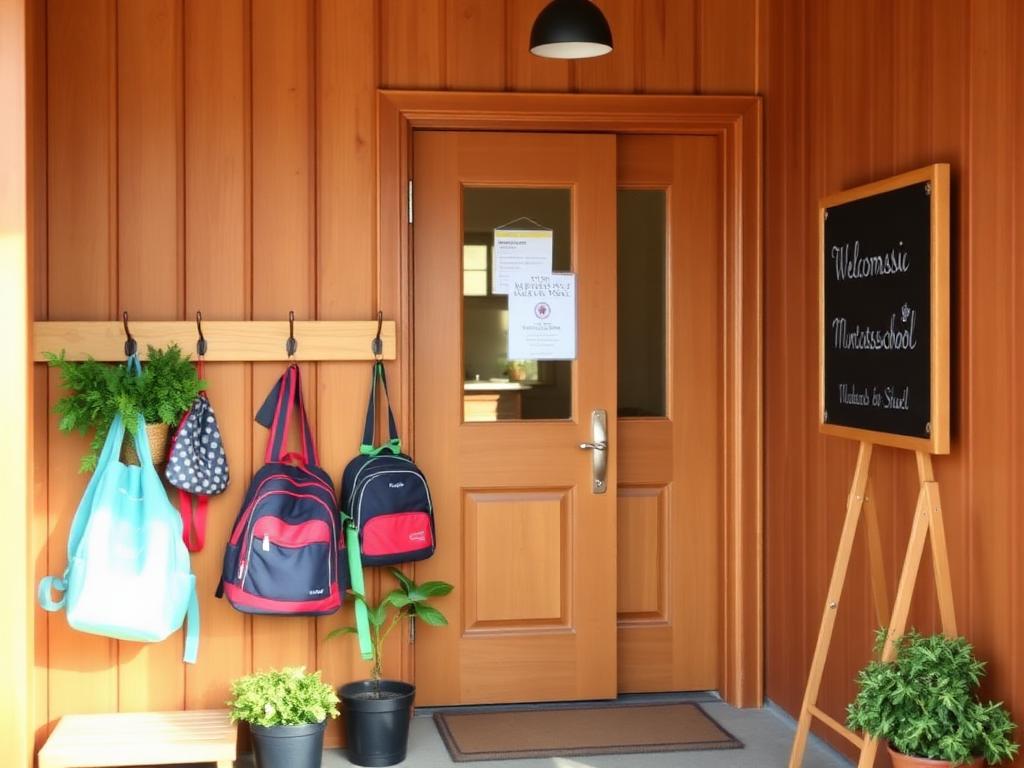
Independence starts at the door. Mount a low hook your child can reach for their own coat. Put a small basket or bench at their height for shoes. Keep their outdoor things in one consistent, reachable place. The goal is that getting ready to leave becomes something your child does, not something done to them — even if it takes three extra minutes at first.
The signature Montessori bedroom is calm and uncluttered: a floor bed or low bed the child can get in and out of safely, a small number of toys on an open shelf (not a toy box), and a low rail or basket of clothes they can choose from. The principle is freedom of movement and visible, limited choices. A child who can see eight toys neatly arranged will engage deeply; a child facing an overflowing bin tends to dump and wander.
Rotate toys rather than displaying them all. Keep six to ten out, store the rest, and swap every couple of weeks. Novelty returns for free, and concentration improves.
This is where the most powerful Montessori work happens, and it costs almost nothing. Create a low shelf or a single low drawer with the child’s own cup, plate, and a small water pitcher so they can pour their own drink. A learning tower or sturdy step stool brings them up to counter height to wash vegetables, spread, stir, and pour. These "practical life" activities build concentration, coordination, and a real sense of contribution. For a breakdown by age, see practical life activities for 1–6 year-olds.
A stable step stool at the sink, a hook for their own towel at child height, and a small basket with a toothbrush and comb let your child manage self-care. Keep it simple and consistent. Care of self is one of the quiet engines of Montessori confidence.
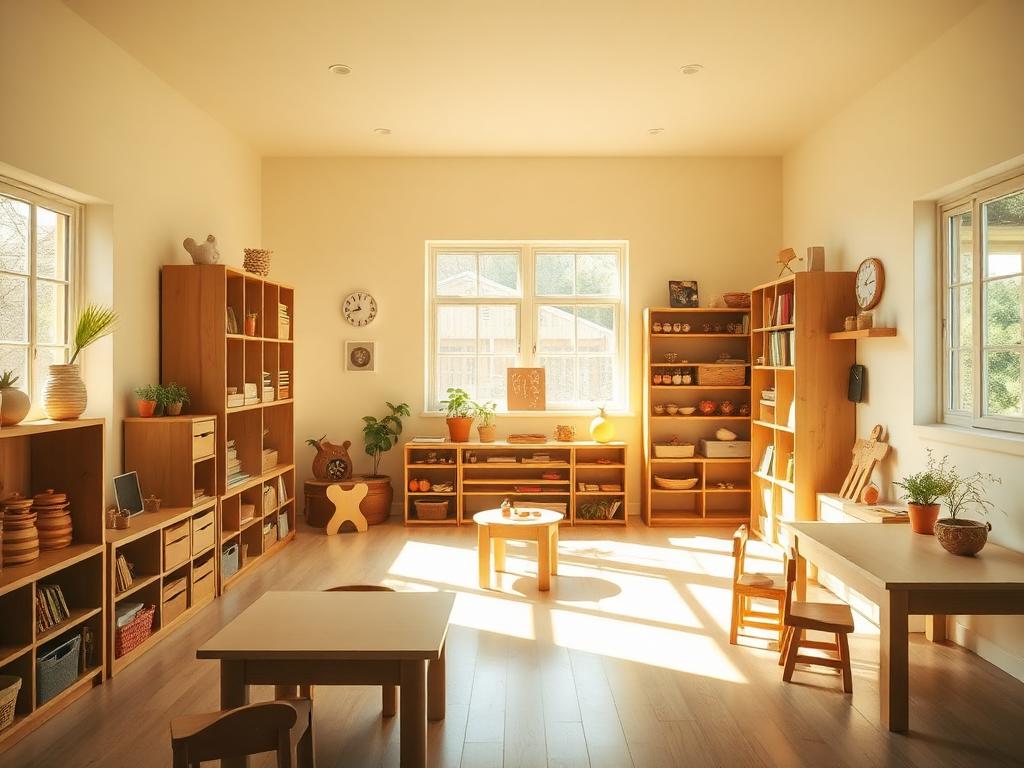
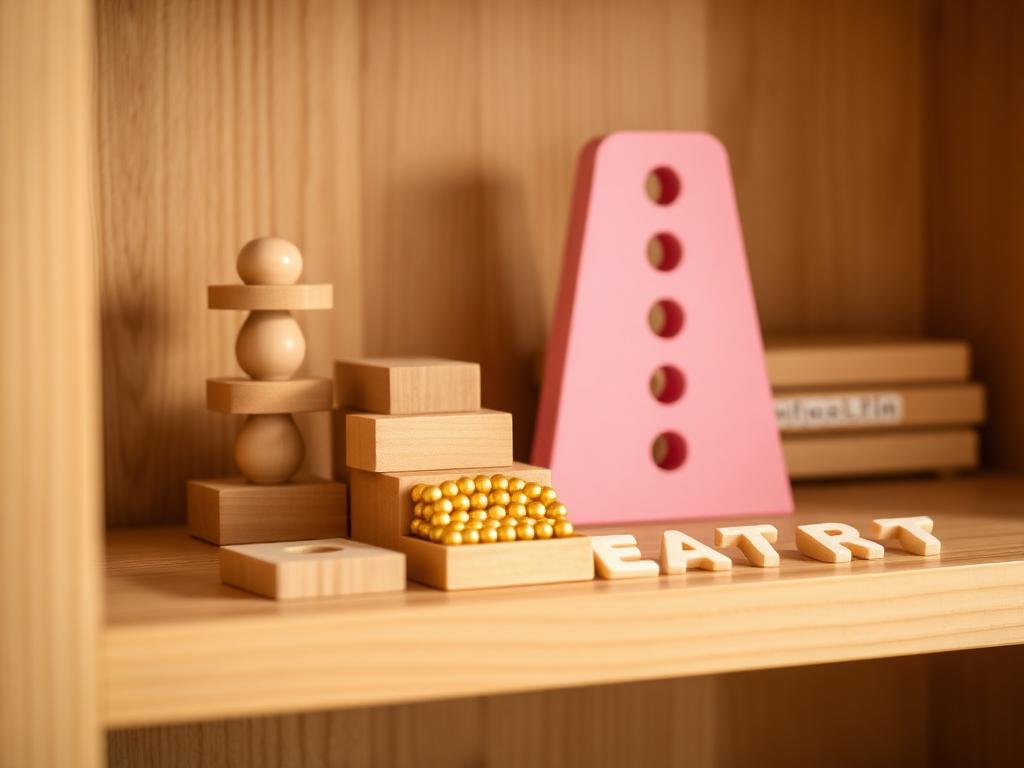
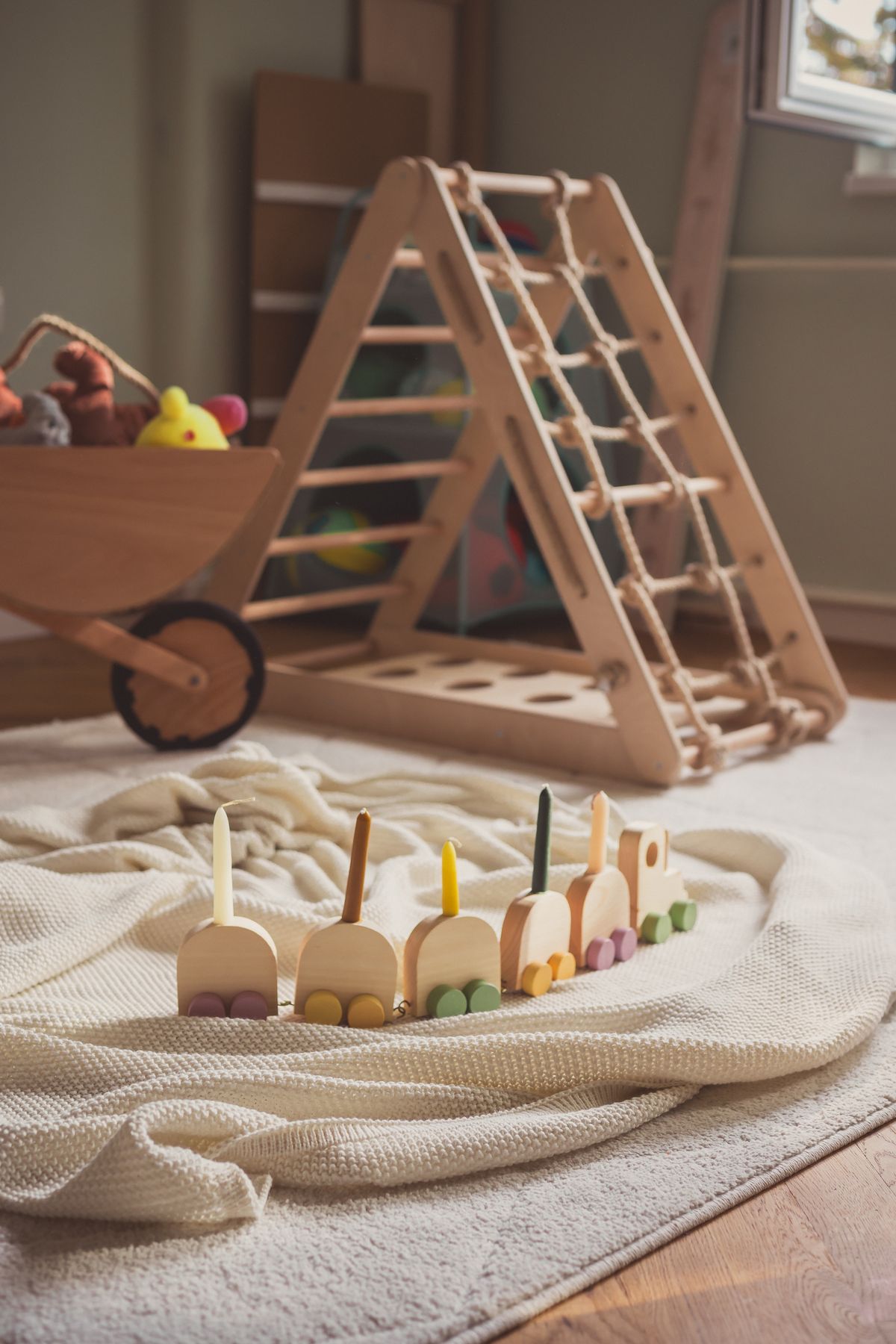
You do not need a dedicated room — a corner works. Use a low, open shelf instead of a toy box so each material has a visible home. Favour open-ended, natural-material toys that invite real engagement over flashing, single-use plastic. If you want a starting point organized by age and skill, look for open-ended options for every stage, from object-permanence boxes to practical-life sets.
Doing Montessori at home does not replace school, and it does not require perfection. Pick one room this week — the kitchen is the highest-impact place to start — and change one thing. If you are also weighing a Montessori program for your child, our Find My School tool can match you with verified schools nearby.
Browse 4,032 Montessori schools across North America — or let our free AI match you with the best fit nearby.